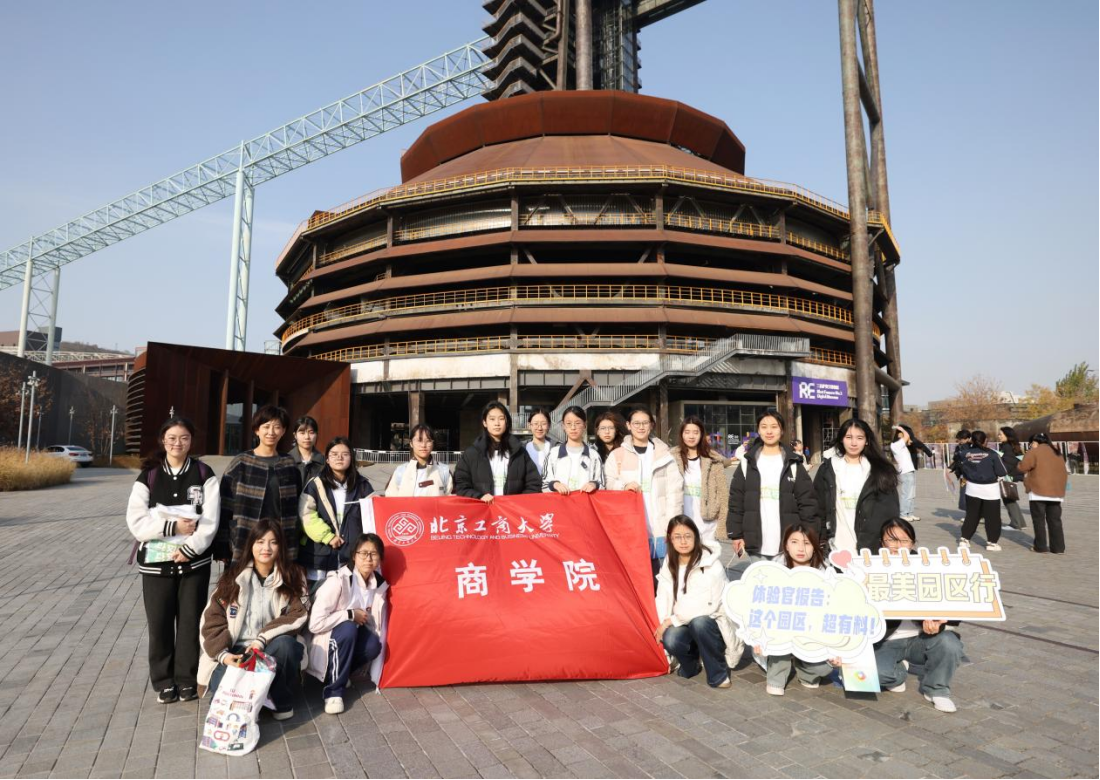
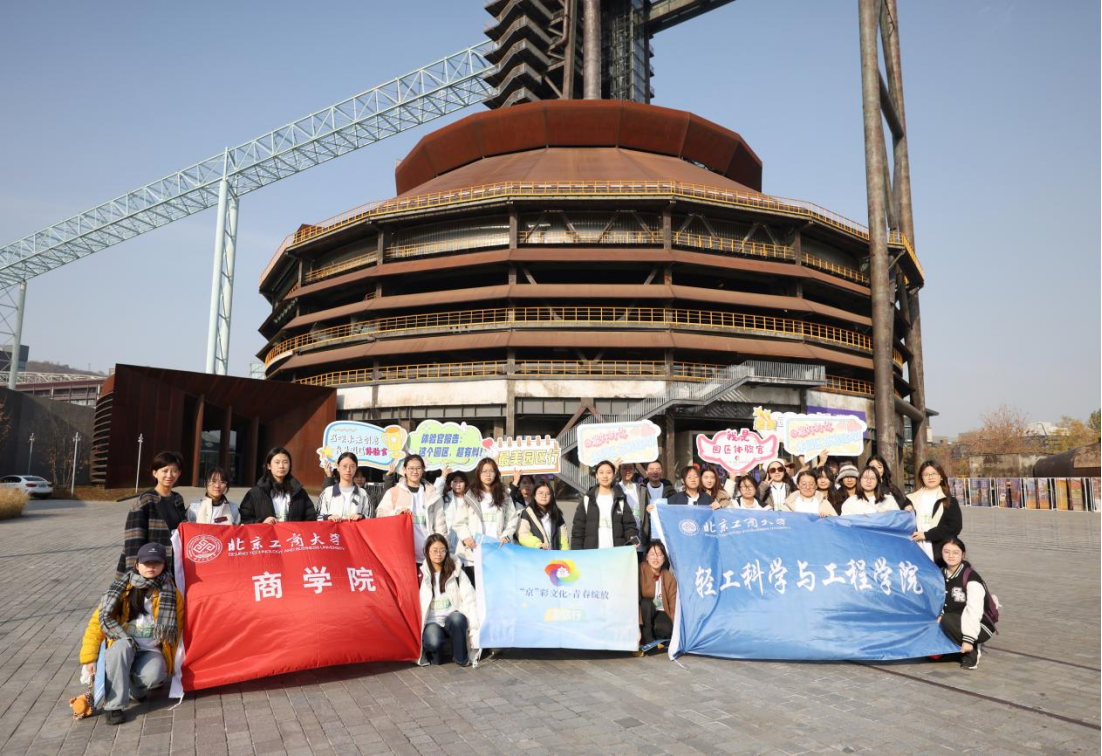
The 2025 “Vibrant Beijing Culture, Youth in Bloom” Park Tour is organized by the Municipal Publicity Department and the Municipal Education Working Committee, and co-hosted by the Cyberspace Affairs Office of the Municipal Committee and the Beijing News, among other units. Centered on the development theme of “Integrated Industry and Business, Striving for Double First-Class,” the Business School and the School of Light Industry Science and Engineering have actively mobilized students to participate in practical activities at cultural and creative parks. Under the organization of Professor Wu Yue, Director of the New Business Youth Innovation Center, and Associate Director Li Jiaxin, students visited the Shougang Park, embarking on a field-based learning experience that integrates theories of “Marketing” and “Cultural Industry Operations.” At the site of this transformed industrial heritage, they witnessed firsthand the profound interplay between culture and commerce.
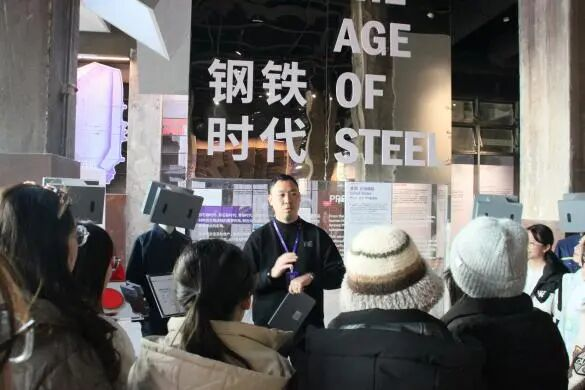
The park director delivered a comprehensive overview of Shougang Park’s transformation journey. Originally a traditional steel production base, the site has been redeveloped into an integrated, cross-sectoral industrial community built around the strategic pillars of “Technology+,” “Sports+,” and “Culture+.” Today, Shougang Park hosts a diverse range of advanced industries, including artificial intelligence, science fiction, the metaverse, sports headquarters economy, and Winter Olympics-related commercial operations, establishing itself as a hub for high-end technology enterprises and cultural-creative innovation institutions. Through the presentation, students gained a deeper understanding of the park’s operational framework and its significance in preserving industrial heritage while driving urban regeneration.
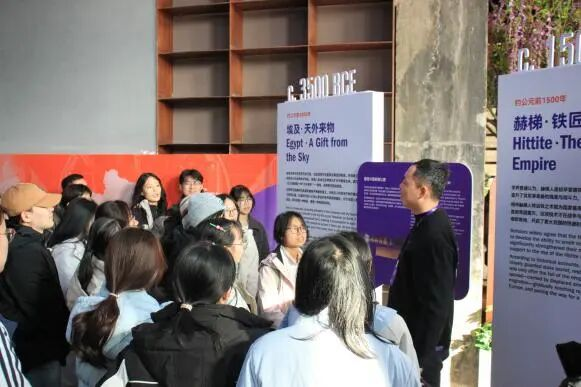
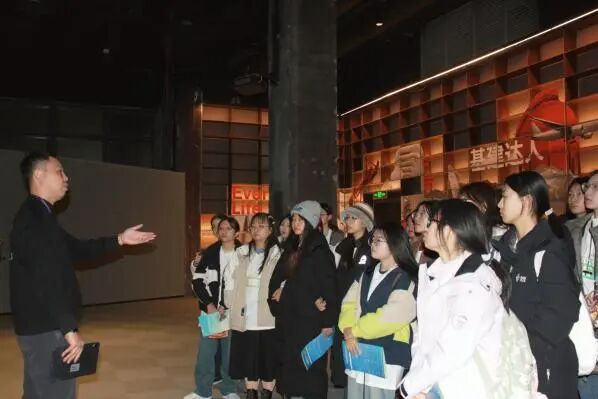
The students visited the RE Rui·Three High Furnace Digital Museum, the 40-meter viewing platform of the Three High Furnace, and the Shougang Ski Big Air venue in sequence, experiencing firsthand the historical legacy and contemporary dynamism of the industrial heritage site. During interactive discussions with park operations managers and cultural industry experts, they drew upon their business education background to engage in in-depth analysis of the operational business models and marketing strategies employed by cultural parks. Through real-world case studies, students developed a concrete understanding of key classroom concepts such as “user persona analysis,” “contextual marketing,” and “brand IP development.” They further recognized that success in the cultural sector depends not only on creative content but also on strategic market positioning and sustainable revenue models.
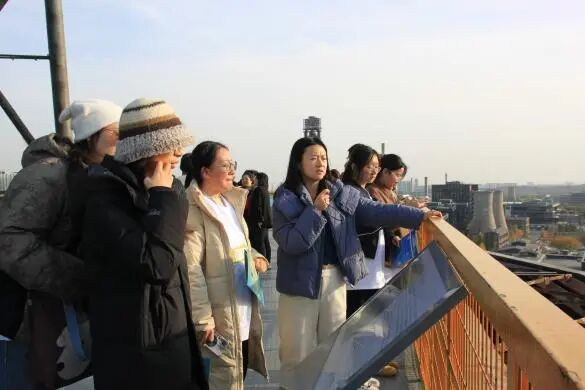
This event marks a significant advancement in the Business School’s “Culture+” practical teaching model. Going forward, the school will further align its new business education initiatives with the evolving trends of Beijing’s cultural industry development by expanding diverse social practice programs and innovative educational activities. It will strengthen collaboration with the cultural and creative sectors to continuously contribute youthful momentum and talent support to the high-quality development of Beijing’s cultural and creative industries.