
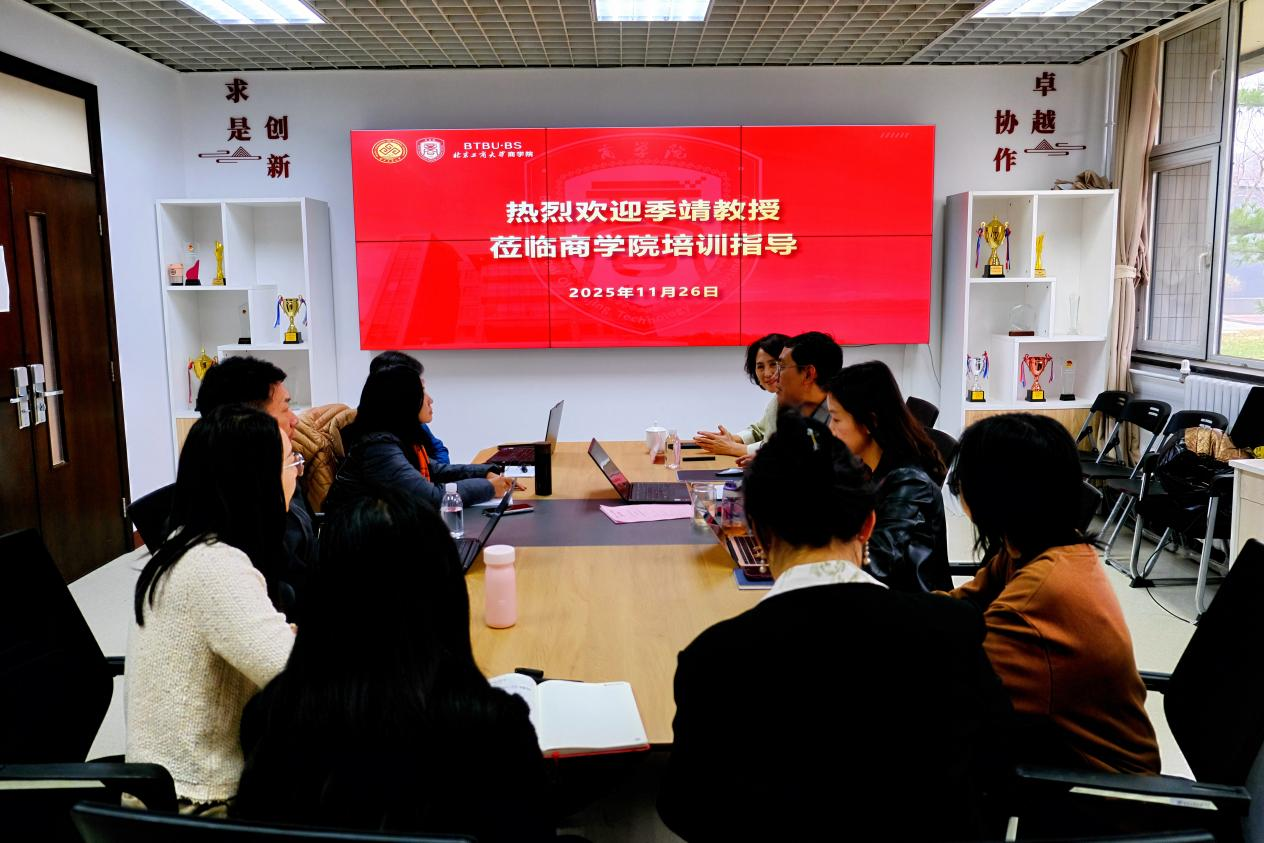
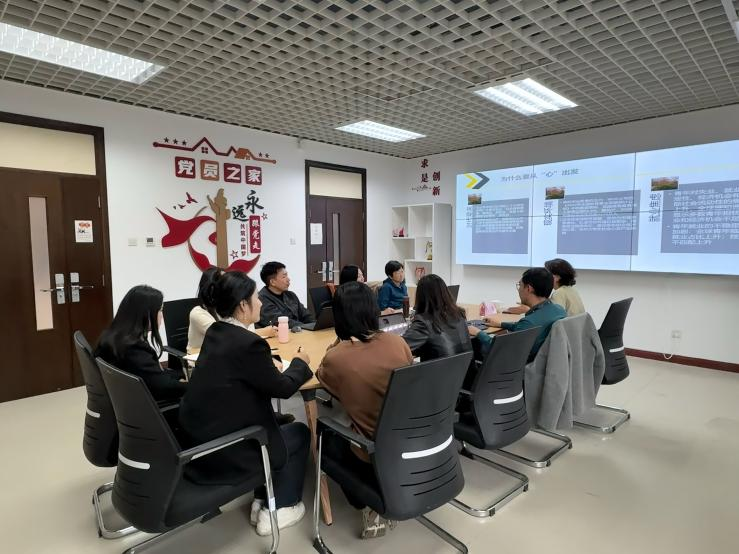
To effectively translate the outcomes of the undergraduate education reform discussion into practice, strengthen the integration of ideological and political education into curricula, and enhance sustainable development competencies, the Business School Teacher Development Center, in collaboration with the Beijing Universities Young Faculty Innovation Teaching and Research Studio, has launched the autumn semester “Co-Growth, Co-Creation, Co-Excellence” Faculty Development Workshop series. On November 26, the School invited Associate Professor Ji Jing from Beijing Wuzi University to deliver the keynote lecture for the “Co-Excellence” Mentorship Lecture Series. The event was attended by Zhang Yue, Deputy Party Secretary of the School, along with representatives of faculty members and counselors, and was chaired by Associate Dean Qiu Yong.
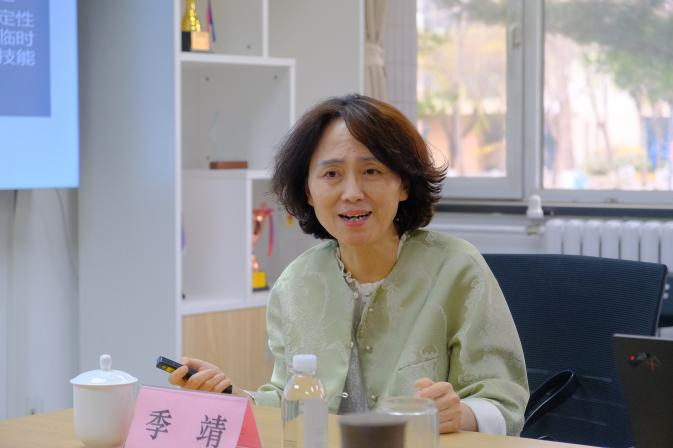
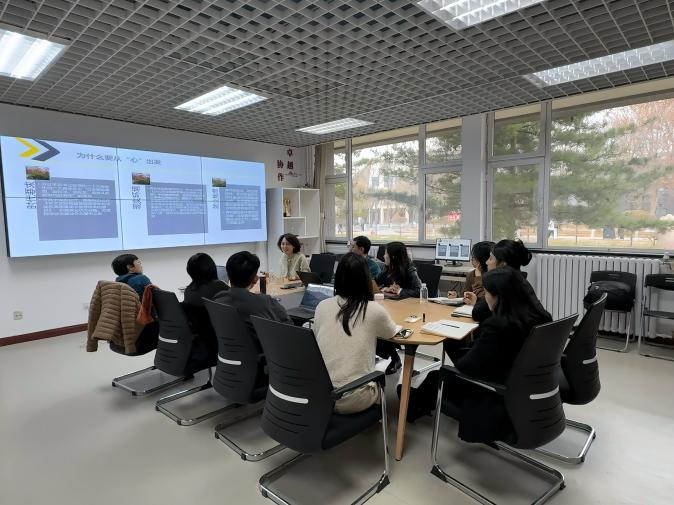
Distinguished Expert Leads the Way in Advancing Talent Development and Addressing Current Educational Challenges
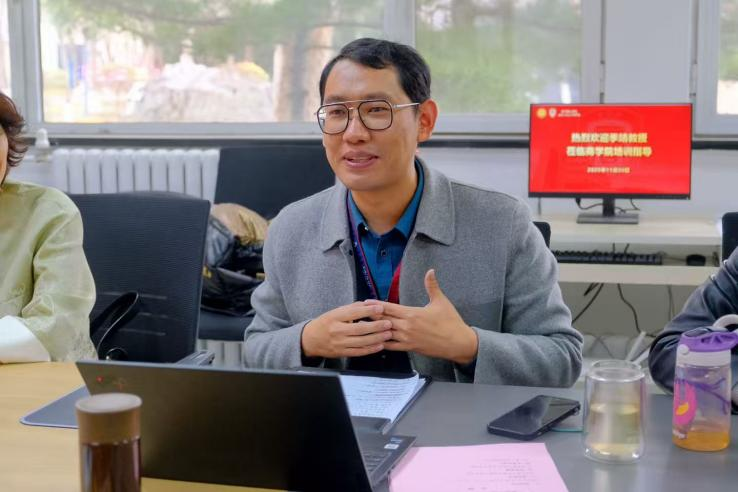
Associate Professor Ji Jing, a doctoral graduate in Education Economics and Management from Peking University, currently serves as an associate professor at the Business School, Beijing Wuzi University. She holds multiple professional credentials, including Global Career Planning Consultant and Coach, Registered Psychologist with the Chinese Psychological Society, and National Second-Level Psychological Counselor. With extensive experience spanning over many years, she has conducted in-depth research and practice in the fields of human resource management, college students’ career development, and mental health education.
Associate Professor Ji highlighted that university-level employment guidance programs frequently face a dual challenge. On one hand, students exhibit varying degrees of “employment anxiety” and “professional identity crisis.” On the other hand, employment-related courses are often perceived by students as lacking practical value, disconnected from real-world needs, and delivered in a monotonous format. She emphasized that traditional approaches tend to intervene “at the endpoint,” leading to a disconnect between cognitive understanding and emotional engagement—what she described as students “knowing in their minds but not in their hearts.” To bridge this gap, she advocated for a paradigm shift: only by starting “from the heart”—genuinely understanding students’ emotional states and developmental needs—can educators effectively guide them to confidently “face their future careers.”
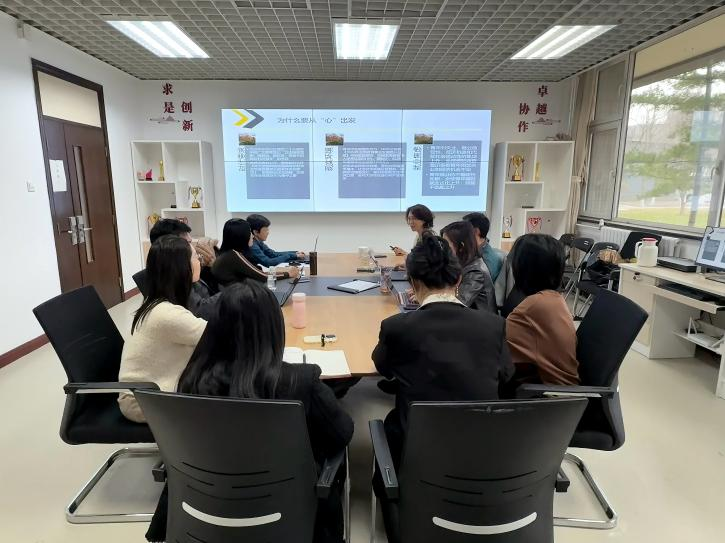
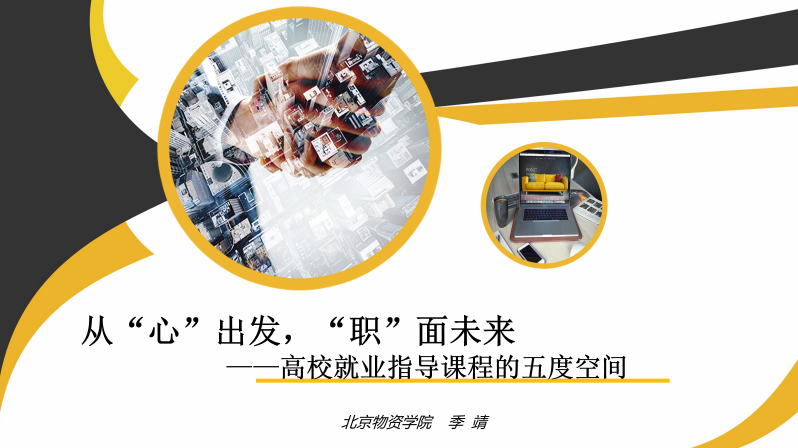
The Five-Dimensional Space: Empowering Educational Practice in Career GuidanceDrawing upon comprehensive student needs assessments and extensive teaching experience, Associate Professor Ji Jing systematically developed the innovative “Five-Dimensional Space Framework for University Employment Guidance Education.” Grounded in humanistic theory, the framework establishes trust through “emotional warmth and empathy”; applies Super’s career development theory to enable “deep exploration,” guiding students to uncover personal strengths through narrative career reflection; leverages ecosystem theory to promote “broad integration,” building a multidimensional support network involving universities, families, employers, and society; integrates trait-factor theory with career construction theory to facilitate “precise decision-making,” employing tools such as decision balance sheets to strengthen students’ vocational choice capabilities; and fosters “dynamic adaptability” by incorporating experiential learning and design thinking through workshops and other interactive formats to cultivate creativity and resilience. These five dimensions are sequentially interwoven, forming a holistic and systematic ecosystem for employment guidance.
Building on this theoretical foundation, Ji Jing illustrated the framework’s practical applications through a series of rich, real-world examples. In her courses, students actively engage in high-participation activities—including group mock interviews, career narrative interviews, and triadic peer coaching exercises—effectively realizing the principle of “learning by doing.” She emphasized that “career guidance is not about knowledge transmission, but about inspiring action.” Educators must shift from being mere knowledge providers to becoming developmental companions, designing immersive and participatory learning experiences that activate intrinsic motivation. In this way, career guidance transcends the classroom, evolving from cognitive understanding into purposeful, actionable outcomes.
Dialogue and Collaboration: Co-Designing the Future of Holistic Education
During the interactive session, participating faculty members engaged in in-depth discussions with Associate Professor Ji Jing on pressing challenges in education practice, including strategies for enhancing student engagement in the classroom, strengthening the professional competencies of academic advisors and counselors, and fostering collaborative mechanisms among government, higher education institutions, and industry partners. The exchange was marked by dynamic dialogue and intellectual synergy. Drawing on her extensive practical experience, Ji Jing offered a wealth of innovative insights and actionable solutions tailored to real-world educational contexts.
In his concluding remarks, Associate Dean Qiu Yong remarked that Dr. Ji’s presentation “exhibits both strong theoretical grounding and high practical relevance,” offering valuable inspiration for the development of career guidance curricula and pedagogical reform within the School. He emphasized that the School will leverage this lecture as a strategic catalyst to advance its initiatives in three key directions: first, strengthening faculty development through regular specialized training workshops and structured collective lesson planning; second, transforming career guidance from an “end-point intervention” into a “holistic, integrated process” by embedding career education throughout the entire talent development journey; and third, deepening industry-academia collaboration by expanding partnerships with enterprises to promote more comprehensive and higher-quality graduate employment outcomes.
This seminar served not only as a platform for knowledge transfer but also as a transformative moment in educational philosophy. The “Five-Dimensional Space” framework introduced by Dr. Ji Jing offers a systematic and well-integrated approach—combining conceptual rigor with practical applicability—to enhance the effectiveness of career guidance. Moving forward, it is anticipated that faculty members will incorporate these insights into their teaching practices, collectively building a distinctive, school-specific career education system that empowers students to transition confidently into the workforce and face the future with resilience and purpose.